Bullet train to Northeast: PM Modi approves Delhi-Guwahati bullet train corridor expansion, extending proposed route to Assam via Varanasi, Patna and Siliguri; CM Himanta thanks Centre
Assam Chief Minister Himanta Biswa Sarma has welcomed the extension of the Northern bullet train corridor from Siliguri to Guwahati, saying Delhi-Guwahati travel could take under eight hours. PM Narendra Modi has approved the Northern corridor, wh...
By ET Online | Updated:
Assam Chief Minister Himanta Biswa Sarma has welcomed the extension of India's proposed Northern bullet train corridor to Guwahati, saying the high-speed rail link could bring the national capital within eight hours of the Northeast. PM Modi has approved the exapansion. The original plan was to connect Delhi with Siliguri in West Bengal through major cities in Uttar Pradesh and Bihar. The route is now set to extend further into Assam after Sarma requested Railway Minister Ashwini Vaishnaw to include Guwahati.
The development follows Railway Minister Vaishnaw's announcement on October 31 that Prime Minister Narendra Modi has approved the Northern bullet train corridor. The proposed route will connect Delhi, Agra, Kanpur, Lucknow, Ayodhya, Varanasi, Prayagraj, Patna and Siliguri before extending to Guwahati. Vaishnaw also shared indicative journey times for several city pairs, including 59 minutes between Delhi and Agra and 1 hour 45 minutes between Delhi and Kanpur.
The Union Budget 2026-27 had announced seven new high-speed rail corridors across India, including these two sections. The idea was to create a high-speed connection between the national capital and eastern India, passing through important cities in Uttar Pradesh, Bihar and West Bengal.
Railway Minister Vaishnaw had also said in June 2026 that the Delhi-Siliguri bullet train journey would take around six hours.
The extension to Guwahati takes the proposed route beyond Siliguri and gives Assam a place on the Northern high-speed rail network.
The proposed sequence is:
For passengers travelling from Delhi, the corridor is expected to provide faster access to cities such as Agra, Kanpur and Lucknow before continuing towards eastern Uttar Pradesh, Bihar and West Bengal.
The extension to Guwahati is particularly significant for the Northeast because it takes the proposed high-speed connection beyond Siliguri, a major transit point for the region.
Here are the travel times he outlined:
Vaishnaw's October 31 announcement gave the Delhi-Varanasi journey as 3 hours and 35 minutes, while the earlier Union Budget announcement had estimated it at around 3 hours and 50 minutes.
The Railway Ministry's February estimates also put the Varanasi-Siliguri journey at approximately 2 hours and 55 minutes.
Sarma has said the extension could make the Guwahati-Delhi journey possible in under eight hours.
He said he had written to Railway Minister Ashwini Vaishnaw and met him in July to request that the proposed route be extended into the Northeast.
According to Sarma, Vaishnaw considered the proposal and approved the extension.
In his post, the Assam Chief Minister thanked PM Narendra Modi and Vaishnaw for the decision, describing it as an important development for eastern India.
Sarma also linked the proposed high-speed connection to Assam's plans to attract high-tech industries. He said faster connectivity with Delhi and other major cities could create opportunities for businesses, investment and employment.
He argued that improved connectivity would be particularly useful for the Northeast, where access to major economic centres has long been an important consideration for businesses.
For the state, the potential benefits go beyond shorter passenger journeys. Faster connections could make business travel easier, improve access to larger markets and support movement between Assam and major economic centres in northern and eastern India.
Sarma said the connection would be important as Assam prepares for a new phase of high-tech industrial development. He also highlighted the possibility of improved connectivity with two state capitals, although the specific routes and journey times have not yet been detailed.
For now, the biggest change is that the Northern bullet train corridor, originally planned around Delhi, Varanasi and Siliguri, is expected to reach Guwahati as well.
The development follows Railway Minister Vaishnaw's announcement on October 31 that Prime Minister Narendra Modi has approved the Northern bullet train corridor. The proposed route will connect Delhi, Agra, Kanpur, Lucknow, Ayodhya, Varanasi, Prayagraj, Patna and Siliguri before extending to Guwahati. Vaishnaw also shared indicative journey times for several city pairs, including 59 minutes between Delhi and Agra and 1 hour 45 minutes between Delhi and Kanpur.
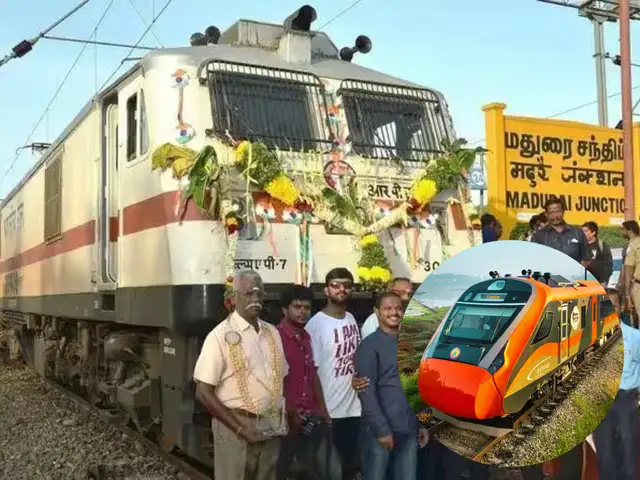
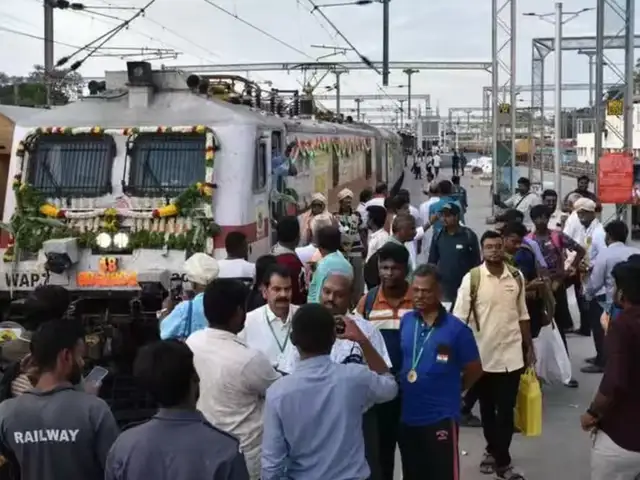
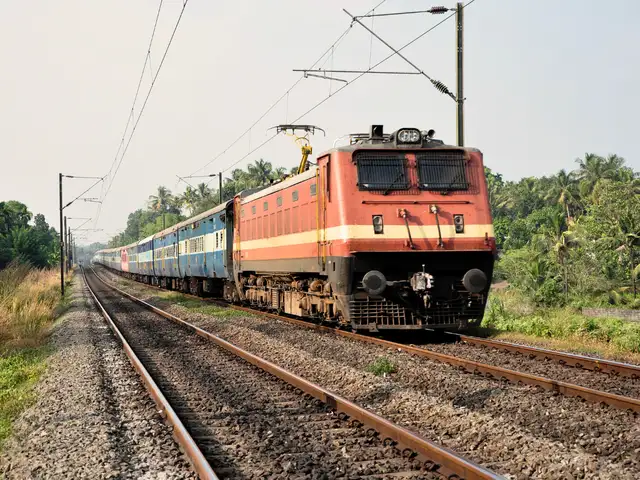
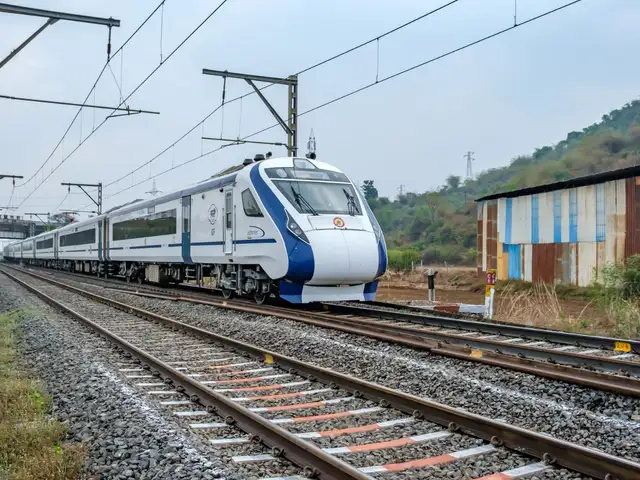
Vaigai Express service has been running between Chennai and Madurai since August 15, 1977. The coaches and engines have been upgraded over the years, with modern LHB coaches added as recently as 2019. But the service itself is nearly 49 years old. On October 24, it matched the travel time of the Vande Bharat, which only started running on this corridor in September 2023.

How the original Northern bullet train corridor was planned
The Northern high-speed rail project was initially planned around two connected sections: Delhi to Varanasi and Varanasi to Siliguri in West Bengal.The Union Budget 2026-27 had announced seven new high-speed rail corridors across India, including these two sections. The idea was to create a high-speed connection between the national capital and eastern India, passing through important cities in Uttar Pradesh, Bihar and West Bengal.
Railway Minister Vaishnaw had also said in June 2026 that the Delhi-Siliguri bullet train journey would take around six hours.
The extension to Guwahati takes the proposed route beyond Siliguri and gives Assam a place on the Northern high-speed rail network.
ADVERTISEMENT
Which cities will the Northern bullet train corridor connect?
The route outlined by Railway Minister Vaishnaw on October 31 will pass through 10 major cities, including the two terminal destinations.The proposed sequence is:
- Delhi
- Agra
- Kanpur
- Lucknow
- Ayodhya
- Varanasi
- Prayagraj
- Patna
- Siliguri
- Guwahati
For passengers travelling from Delhi, the corridor is expected to provide faster access to cities such as Agra, Kanpur and Lucknow before continuing towards eastern Uttar Pradesh, Bihar and West Bengal.
ADVERTISEMENT
The extension to Guwahati is particularly significant for the Northeast because it takes the proposed high-speed connection beyond Siliguri, a major transit point for the region.
Delhi to Agra in 59 minutes, Kanpur in 1 hour 45 minutes: Check proposed bullet train travel times
Railway Minister Ashwini Vaishnaw shared several indicative journey times while announcing the Northern corridor's approval by PM Modi.ADVERTISEMENT
Here are the travel times he outlined:
| City-to-city route | Proposed travel time |
|---|---|
| Delhi to Agra | 59 minutes |
| Delhi to Kanpur | 1 hour 45 minutes |
| Delhi to Lucknow | 2 hours 12 minutes |
| Delhi to Varanasi | 3 hours 35 minutes |
| Varanasi to Lucknow | 1 hour 21 minutes |
| Varanasi to Patna | 1 hour |
| Varanasi to Prayagraj | 33 minutes |
| Varanasi to Agra | 2 hours 34 minutes |
The Railway Ministry's February estimates also put the Varanasi-Siliguri journey at approximately 2 hours and 55 minutes.
Sarma has said the extension could make the Guwahati-Delhi journey possible in under eight hours.
How Himanta Sarma pushed for the Guwahati extension
Announcing the development on social media, Sarma said the original Northern bullet train corridor was intended to end at Siliguri.He said he had written to Railway Minister Ashwini Vaishnaw and met him in July to request that the proposed route be extended into the Northeast.
According to Sarma, Vaishnaw considered the proposal and approved the extension.
In his post, the Assam Chief Minister thanked PM Narendra Modi and Vaishnaw for the decision, describing it as an important development for eastern India.
Sarma also linked the proposed high-speed connection to Assam's plans to attract high-tech industries. He said faster connectivity with Delhi and other major cities could create opportunities for businesses, investment and employment.
He argued that improved connectivity would be particularly useful for the Northeast, where access to major economic centres has long been an important consideration for businesses.
What the Guwahati extension could mean for Assam
The proposed extension changes the geographical reach of the Northern corridor. Instead of terminating at Siliguri, the route is now expected to continue towards Guwahati, bringing Assam into the planned high-speed rail network.For the state, the potential benefits go beyond shorter passenger journeys. Faster connections could make business travel easier, improve access to larger markets and support movement between Assam and major economic centres in northern and eastern India.
Sarma said the connection would be important as Assam prepares for a new phase of high-tech industrial development. He also highlighted the possibility of improved connectivity with two state capitals, although the specific routes and journey times have not yet been detailed.
For now, the biggest change is that the Northern bullet train corridor, originally planned around Delhi, Varanasi and Siliguri, is expected to reach Guwahati as well.
Start a SIP with as low as ₹500 with ET Money App!
Download
The Economic Times News App for Quarterly Results, Latest News in ITR, Business, Share Market, Live Sensex News & More.
The Economic Times News App for Quarterly Results, Latest News in ITR, Business, Share Market, Live Sensex News & More.
ADVERTISEMENT


