
Not just Vande Bharat Sleeper, bullet train too on the cards: UP may soon get faster rail connectivity with Delhi, Agra, Lucknow and Varanasi
1/5
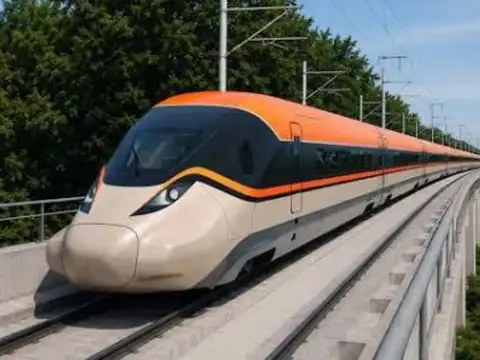
Ashwini Vaishnaw highlights benefits of proposed Bullet Train Northern Corridor
Uttar Pradesh is set to get a major boost to rail connectivity, with plans for a bullet train corridor alongside the proposed Vande Bharat Sleeper services. Union Railway Minister Ashwini Vaishnaw on Saturday outlined the proposed Northern Corridor for high-speed rail, saying it would sharply reduce travel times between major cities, including Delhi, Lucknow, Kanpur and Varanasi. He said the project, approved by Prime Minister Narendra Modi, would benefit passengers and the economy for decades.
2/5
Bullet train to cut travel time between Delhi, Lucknow and Varanasi
Speaking to ANI, Vaishnaw shared the proposed journey times on the Northern Corridor, which is expected to connect several important cities across northern India. Under the plan, the Delhi-Kanpur journey would take 1 hour 45 minutes, while Delhi-Agra travel would take 59 minutes. The proposed travel time between Delhi and Lucknow is 2 hours 12 minutes, while Varanasi-Lucknow would take 1 hour 21 minutes. Other proposed journey times include one hour between Varanasi and Patna, 3 hours 33 minutes between Varanasi and Delhi, 33 minutes between Varanasi and Prayagraj, and 2 hours 34 minutes between Varanasi and Agra. “The Northern Corridor for the bullet train, approved by our Prime Minister, will provide benefits to the nation for decades, and indeed, for up to a century. With the bullet train, travel times will be significantly reduced,” Vaishnaw said. He added that the project would improve convenience for middle-class families, the underprivileged, young people, small-scale entrepreneurs and the MSME sector.

3/5
Enjoy Thaggu Ke Laddu and return to Delhi
Uttar Pradesh is expected to play an important role in the proposed bullet train network, with the Northern Corridor set to connect several major cities. The route, approved by Prime Minister Narendra Modi, is planned to start in Delhi and pass through Agra, Kanpur, Lucknow and Ayodhya before reaching Varanasi, Patna and eventually Guwahati. Sharing the proposed travel times, Vaishnaw said the journey from Delhi to Agra could take just 59 minutes, while Delhi to Kanpur would take around 1 hour 45 minutes. To explain the convenience of the service, he cited Kanpur's famous Thaggu Ke Laddu, saying passengers could make a quick trip to the city and return to Delhi within a few hours.
4/5
Vande Bharat Sleeper to connect Banaras and Delhi overnight
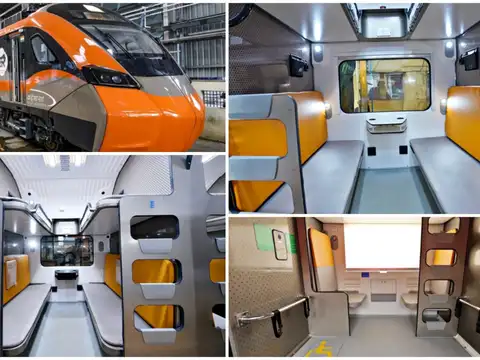
Apart from the proposed bullet train network, Vaishnaw also spoke about the role of Vande Bharat Sleeper trains in improving overnight connectivity. The service is expected to allow passengers to leave Banaras at night and reach Delhi by morning, with the same convenience in the opposite direction. The minister said the service would make long-distance rail travel more convenient for passengers. “The ‘Vande Bharat’ sleeper trains will also be a significant convenience, allowing passengers to depart from Banaras at night and arrive in Delhi by morning, or vice versa,” he said. Vaishnaw also described Kashi railway station and the Namo bridge as important parts of a larger transport hub that could strengthen connectivity across North and Northeast India.
5/5
Kashi railway station to get large waiting area for 50,000 passengers
The minister also outlined the facilities planned at Kashi railway station, including a large waiting area capable of accommodating more than 50,000 passengers at a time. He said the space would be roughly the size of a football field, with facilities planned on both the northern and southern sides of the station. The southern side is located around 2 km from the Kashi Vishwanath Temple, making it easier for devotees and tourists to reach the temple and the city's ghats. “The Kashi station has been designed with expansive facilities on both its northern and southern sides, featuring a massive waiting area, roughly the size of a football field, capable of accommodating over 50,000 passengers simultaneously,” Vaishnaw said. He added that the station, along with the Namo bridge, would emerge as a major railway and transport hub for the region.