Modi govt's plan to allow 100% FDI in rail infra picks up pace; but investors in wait-and-watch mode
Indian Railways must focus on wooing foreign investors first to the low hanging fruit before getting more ambitious with bullet train projects.
By Shantanu Nandan Sharma, ET Bureau |
A week before retiring as Railway Board chairman on December 31, Arunendra Kumar conceded that foreign investors were not gung-ho over pouring money into the Indian Railways (IR).
The fear that the Railways may tweak the rulebook somewhere down the line still looms large in the minds of potential investors even as the August 26 order allowing 100% foreign direct investment (FDI) in most rail infrastructure states the fineprint in clear terms.
But Kumar, who had a 38-year-long innings in the Railways, claims he knows a trick or two to attract FDI into this mammoth sarkari department (which houses a 1.4 million workforce and where decisions are taken in various complex pathways of a bureaucratic maze).
In high-speed rail projects — informally called bullet trains — a foreign player is now allowed to run a parallel and fully privatised railway company, completely detached from the existing IR network.
The Reserve Bank of India notified the new rules last month and foreign corporations such as Bombardier, GE, Alstom, Siemens, EMD, Mitsubishi, Toshiba and Mitsui are expected to bring in both the money and state-of-the-art technology.
Chugging Along
Despite protests and apprehensions, the IR has little choice but to woo foreign investors as it currently lacks both resources and new technology to undertake expansion or modernisation programmes.
According to the last Railway budget presented in July after the Narendra Modi-led government came into power, gross traffic receipts in 2013-14 stood at Rs 1,39,558 crore but the operating ratio was high at 94%; in other words, for every Rs 100 that the Railways earns, it spends Rs 94 for day-to-day expenses leaving only Rs 6 for investment.
What has rattled the government further is the reality that the IR’s operating ratio has remained above 90% for six consecutive years. The IR’s best-ever operating ratio was 74.7% achieved way back in 1963-64.
“The Indian Railways has now no option but to take the FDI route to become more competitive with the high-cost highway sector. Attracting FDI is highly desirable, but the success of the FDI story will depend on how much freedom the private players get to fix tariffs and market their products,” says Ajay Dua, former secretary, ministry of industry and commerce.
Dua recounts how, in a pre-feasibility study in 2005, Japan International Cooperation Agency and RITES, a state-owned engineering consultancy, pegged the fare between Mumbai and Ahmedabad in a highspeed train at about Rs 2,100.
The Railways then was reluctant to give a go-ahead, arguing that it would be difficult to find customers at such a high rates. Being a secretary, Dua was privy to that development.
“Now, I suspect, the fare for one trip between Mumbai and Ahmedabad could be as high as Rs 14,000. The feasibility report [expected to be completed in next six months] will arrive at a more exact figure. I don’t think FDI will rush into areas as high-speed rail, even though theoretically it may have opened up to foreign investors,” he says.
In Wait-and-watch Mode
Bringing in FDI, and investing in large manufacturing facilities in anticipation of bulk IR orders, is clearly a gamble. Most investors would prefer to wait for bidding to begin and win contracts before investing in factories.
Take, for example, Canadian multinational Bombardier, which invested €33 million (roughly Rs 240 crore) six years ago to set up a rail vehicles production site at Savli in Gujarat, mainly to supply rolling stock for metro rail. “We are exporting 450 metro cars to the Australian market from this Gujarat facility.
Let us get an order from the Indian Railways, we will immediately expand the facility,” says Harsh Dhingra, chief country representative, Bombardier. Dhingra explains that the IR must focus on wooing foreign investors to the low hanging fruit before getting ambitious with big-ticket bullet train projects.
“Two projects where FDI can come in right away are in the electric loco factory in Madhepura and the diesel locomotive factory in Marhowrah, both in Bihar.
But the bidding has to take place,” Dhingra adds. The IR had short-listed four multinationals — Bombardier, Siemens, Alstom and General Electric — but the companies have been waiting for the request for proposal (RFP) documents for the last eight months.
Though a section of the workforce and trade unions in particular has expressed their concern over FDI in rail infrastructure, fearing that this could be the first step towards privatisation, there has not been any serious resistance.
In fact, the bigger challenge is emanating from the investors themselves Sample this: RR Jaruhar, former member (engineering) of Railway Board along with his fellow members of a government-appointed panel, were confronted with a volley of uncomfortable questions a few months ago when they had interacted with investors, both Indian and foreign, when preparing a report on mobilisation of extra-budgetary resources for implementation of rail projects.
The fear that the Railways may tweak the rulebook somewhere down the line still looms large in the minds of potential investors even as the August 26 order allowing 100% foreign direct investment (FDI) in most rail infrastructure states the fineprint in clear terms.
But Kumar, who had a 38-year-long innings in the Railways, claims he knows a trick or two to attract FDI into this mammoth sarkari department (which houses a 1.4 million workforce and where decisions are taken in various complex pathways of a bureaucratic maze).
 |
Finding the first investor, and ensuring he remains a blissful one, is crucial, reckons Kumar. “Finding Columbus [who discovered America] and taking care of him well will be the key to the success of FDI story in Indian Railways. Other investors will follow him.”
On paper, the IR is now fully opened up. A foreign player can invest up to 100% in most segments of rail infrastructure such as suburban rail, metro rail, locomotive and rolling stock and dedicated freight lines.In high-speed rail projects — informally called bullet trains — a foreign player is now allowed to run a parallel and fully privatised railway company, completely detached from the existing IR network.
The Reserve Bank of India notified the new rules last month and foreign corporations such as Bombardier, GE, Alstom, Siemens, EMD, Mitsubishi, Toshiba and Mitsui are expected to bring in both the money and state-of-the-art technology.
ADVERTISEMENT
Chugging Along
Despite protests and apprehensions, the IR has little choice but to woo foreign investors as it currently lacks both resources and new technology to undertake expansion or modernisation programmes.
According to the last Railway budget presented in July after the Narendra Modi-led government came into power, gross traffic receipts in 2013-14 stood at Rs 1,39,558 crore but the operating ratio was high at 94%; in other words, for every Rs 100 that the Railways earns, it spends Rs 94 for day-to-day expenses leaving only Rs 6 for investment.
What has rattled the government further is the reality that the IR’s operating ratio has remained above 90% for six consecutive years. The IR’s best-ever operating ratio was 74.7% achieved way back in 1963-64.
ADVERTISEMENT
“The Indian Railways has now no option but to take the FDI route to become more competitive with the high-cost highway sector. Attracting FDI is highly desirable, but the success of the FDI story will depend on how much freedom the private players get to fix tariffs and market their products,” says Ajay Dua, former secretary, ministry of industry and commerce.
Dua recounts how, in a pre-feasibility study in 2005, Japan International Cooperation Agency and RITES, a state-owned engineering consultancy, pegged the fare between Mumbai and Ahmedabad in a highspeed train at about Rs 2,100.
ADVERTISEMENT
The Railways then was reluctant to give a go-ahead, arguing that it would be difficult to find customers at such a high rates. Being a secretary, Dua was privy to that development.
“Now, I suspect, the fare for one trip between Mumbai and Ahmedabad could be as high as Rs 14,000. The feasibility report [expected to be completed in next six months] will arrive at a more exact figure. I don’t think FDI will rush into areas as high-speed rail, even though theoretically it may have opened up to foreign investors,” he says.
In Wait-and-watch Mode
Bringing in FDI, and investing in large manufacturing facilities in anticipation of bulk IR orders, is clearly a gamble. Most investors would prefer to wait for bidding to begin and win contracts before investing in factories.
Take, for example, Canadian multinational Bombardier, which invested €33 million (roughly Rs 240 crore) six years ago to set up a rail vehicles production site at Savli in Gujarat, mainly to supply rolling stock for metro rail. “We are exporting 450 metro cars to the Australian market from this Gujarat facility.
Let us get an order from the Indian Railways, we will immediately expand the facility,” says Harsh Dhingra, chief country representative, Bombardier. Dhingra explains that the IR must focus on wooing foreign investors to the low hanging fruit before getting ambitious with big-ticket bullet train projects.
“Two projects where FDI can come in right away are in the electric loco factory in Madhepura and the diesel locomotive factory in Marhowrah, both in Bihar.
But the bidding has to take place,” Dhingra adds. The IR had short-listed four multinationals — Bombardier, Siemens, Alstom and General Electric — but the companies have been waiting for the request for proposal (RFP) documents for the last eight months.
Though a section of the workforce and trade unions in particular has expressed their concern over FDI in rail infrastructure, fearing that this could be the first step towards privatisation, there has not been any serious resistance.
In fact, the bigger challenge is emanating from the investors themselves Sample this: RR Jaruhar, former member (engineering) of Railway Board along with his fellow members of a government-appointed panel, were confronted with a volley of uncomfortable questions a few months ago when they had interacted with investors, both Indian and foreign, when preparing a report on mobilisation of extra-budgetary resources for implementation of rail projects.
Indecision has been a part of Rail Bhawan culture for decades. But what has exacerbated the situation is the railway minister’s post becoming a game of musical chairs.
In less than four years, there have been eight railway ministers — Mamata Banerjee, Dinesh Trivedi, Mukul Roy, all from Trinamool Congress; CP Joshi, Pawan Kumar Bansal and Mallikarjun Kharge, from Congress; and then DV Sadananda Gowda and Suresh Prabhu of the BJP. The cash-for-jobs scandal involving senior Railway Board officers and a close relative of the then rail minister Bansal in May 2013 further led to the culture of policy paralysis.
| |
Prabhu had dramatically resigned from the Shiv Sena to join BJP on the day he was appointed India’s railway minister in November.
On his part, Prabhu has decided to disassociate his office from the tender process so as to speed up the decision-making process.
ADVERTISEMENT
According to the new directives, zonal railways and production units are now empowered to handle most tenders that used to be referred to the Railway Board. That’s one small step by Prabhu, and one giant leap for the Railways.
Railways' FDI policy must remain stable: Arunendra Kumar, Chairman, Railway Board
Arunendra Kumar was chairman of Railway Board when the government announced 100% FDI in most rail infrastructure in August last year. In one of his last media interactions before retiring on December 31, Kumar told ET Magazine that the first FDI cheques should come in station development and bullet trains. Excerpts:
On Expectations of FDI
ADVERTISEMENT
Our first expectation is that investors must get attracted to FDI in Railways. It will depend on us too: how well we market ourselves. After all, the investor will look for a return. He must be convinced that the Railways’ FDI policy remains stable, and does not change after an investment is made. Also, we have to ensure that the environment should be investor-friendly. There should not be any roadblock when the project is on. We are ready to change to woo investments.
On Roadshows Abroad
ADVERTISEMENT
We already have had an investors’ meet. Two more such interactive meetings will take place in January and February. We are also planning roadshows in select foreign destinations such as Japan, Korea, China, Singapore, France, Germany, Spain, the US and Australia. Our records have indicated that the Japanese investment proposals will now mature. But we have seen interest from other quarters too. For instance, a Canadian pension fund has shown interest in investing in Railways. The investments from any such fund to the Railways will be quite new. So, we have to work out new financial models.
On the First FDI Cheque
The first FDI should come in station development and high speed rail [bullet trains]. It’s difficult to give any ballpark figure of potential investments. All will depend on the first investment. [Christopher] Columbus found America, and then everyone else landed there. We have to find Columbus and then others will see how well we are taking care of him. That will set the ball rolling. We are quite hopeful that we see some FDI in Railways in 2015-16.
On Apprehensions about FDI
Foreign investors always fear that the government being sovereign can change its own rules. The container operators say they feel cheated as the Railways did not keep its promises. So, we have to be cautious that there is no room for any misgivings.
Another apprehension is from within. Many railway workers suspect that FDI could be the first step to privatisation of Indian Railways. Some of them have voiced their concern saying that they don’t welcome FDI in Railways. We have had a series of meetings with the unions and federations. We have explained to them that private capital is different from privatisation. At the end of the day, the Railways must grow. Railway men should feel more secure. Their pay packages should go up.
Start a SIP with as low as ₹500 with ET Money App!
Download
The Economic Times News App for Quarterly Results, Latest News in ITR, Business, Share Market, Live Sensex News & More.
The Economic Times News App for Quarterly Results, Latest News in ITR, Business, Share Market, Live Sensex News & More.
Related Articles
 Corporate India’s overseas FDI commitments halve in May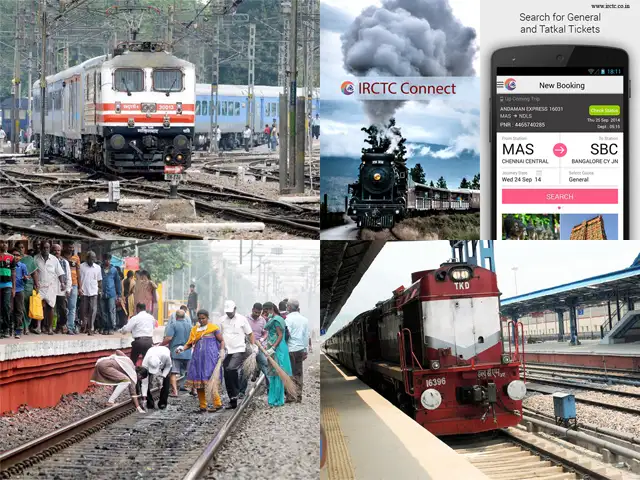
Economictimes.com
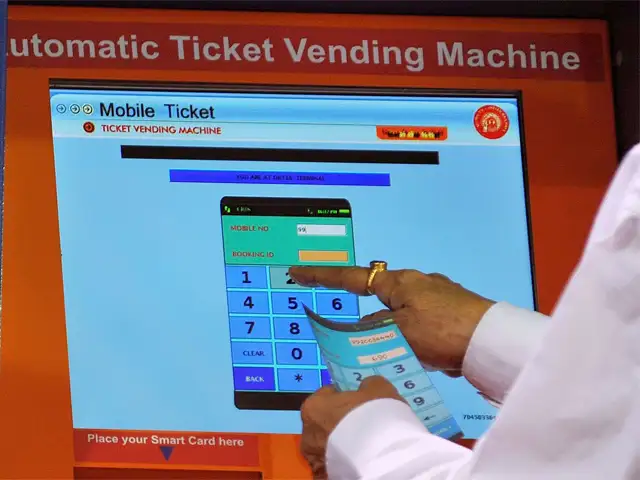
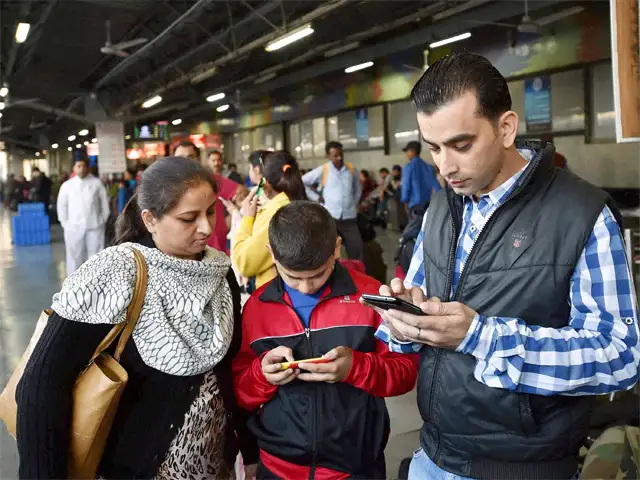
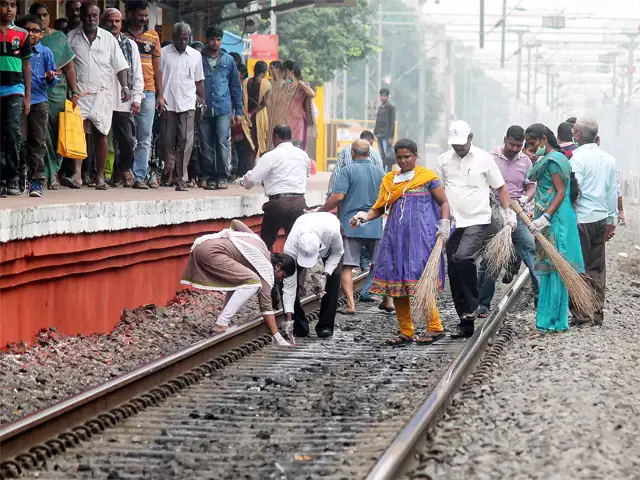
High-speed trains, mobile ticketing, cleaner stations and better food - these are just some of the many initiatives that were taken by the Indian Railways to improve passenger experience and its own functioning.
Among the plethora of steps taken by the Railways, we highlight nine steps that deserve a special mention:
High-speed trains, mobile ticketing, cleaner stations and better food - these are just some of the many initiatives that were taken by the Indian Railways to improve passenger experience and its own functioning.
Among the plethora of steps taken by the Railways, we highlight nine steps that deserve a special mention:


ADVERTISEMENT


