
From 6 hours to just 1.5 from Mumbai to Ahmedabad: What passengers need to know about the railway plan that could transform the journey
1/10
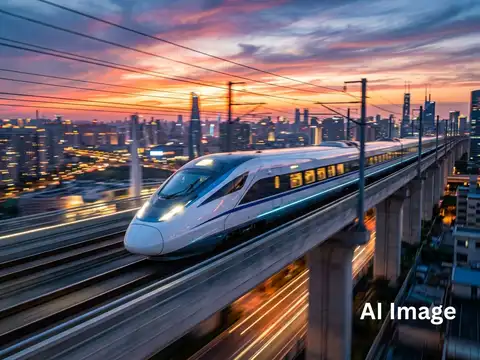
Mumbai to Ahmedabad in 1.5 hours? India’s bullet train plan explained
India’s first bullet train project is moving closer to its trial-run stage, with the indigenous high-speed train expected to begin testing on the Mumbai-Ahmedabad corridor in May or June 2027. The project is aimed at cutting travel time between major cities and bringing high-speed rail travel to India for the first time.
2/10
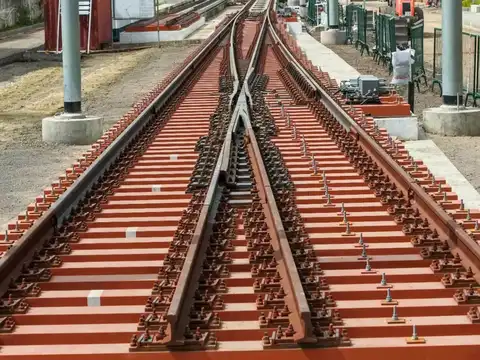
When will India’s bullet train start running?
The first indigenous high-speed train is expected to enter trial runs in May or June 2027. The testing will take place on the Mumbai-Ahmedabad High-Speed Rail Corridor, which is being developed as India’s first dedicated bullet train route. The train will undergo extensive testing before passenger services begin. Officials expect the testing phase to continue for around two to four months, after which the service could be opened to commuters, subject to the completion of the required checks and approvals.
3/10
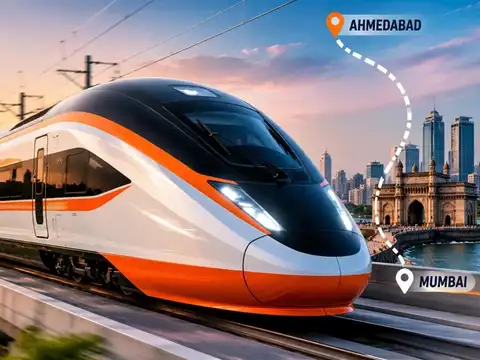
Mumbai-Ahmedabad bullet train: What is the project?
The Mumbai-Ahmedabad bullet train project is a dedicated high-speed rail corridor connecting Mumbai in Maharashtra with Ahmedabad in Gujarat. The route is being built to support trains travelling at much higher speeds than conventional Indian trains. The project is being developed in phases, with different sections expected to become ready at different times. This means passengers may get access to parts of the route before the entire Mumbai-Ahmedabad corridor is operational.
Amazon Top Deals
POWERED BY

Crompton Ozone 75 Litres Desert Air Cooler for home | Large & Easy Clean Ice Chamber | 4-Way Air Deflection | High Density Honeycomb Pads | Everlast Pump | Auto Fill| 3 Year Brand Warranty
₹9,798Buy Now43%
OFF

LG 32 L Convection Microwave Oven (MC3286BRUM, Black, 360° Motorised Rotisserie for Bar-be-queing, 301 Auto Cook Menu, Stainless steel cavity, Indian Cuisine, Tandoor Se, Steam Clean & Diet Fry)
₹18,690Buy Now22%
OFF

4/10
Mumbai to Ahmedabad in 1.5 hours? Here’s what the bullet train promises
One of the biggest attractions of the project is the sharp reduction in travel time. The high-speed service is expected to bring major cities along the route much closer in terms of journey time. A trip between Vadodara and Mumbai, for instance, is expected to take around 90 minutes by bullet train. The full Mumbai-Ahmedabad journey will also be significantly faster than existing rail services once the complete corridor becomes operational.
5/10
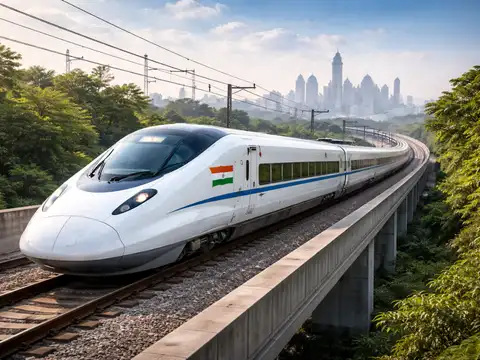
India’s bullet train gets closer to track trials
The indigenous high-speed train has already crossed an important manufacturing milestone, with its first body frame completed and sent for squeeze testing. The structural test is designed to assess the strength and durability of the train coaches. Such testing is an important step before the train can move on to dynamic trials and eventually undergo testing on the high-speed rail corridor.
6/10
Mumbai-Ahmedabad bullet train construction update
Construction of the Mumbai-Ahmedabad High-Speed Rail Corridor is progressing across multiple sections. Some parts of the route are expected to be completed ahead of others, allowing the project to move towards a phased rollout. The Surat-Vapi section is expected to be completed by December, while other stretches are being developed simultaneously as work continues on stations, tracks and associated infrastructure.

7/10
Surat-Bilimora may become the first operational stretch
The Surat-Bilimora section is planned to be the first part of the Mumbai-Ahmedabad bullet train corridor to become operational. Once this section is ready for passenger services, the high-speed rail network is expected to expand progressively to other parts of the corridor. The phased approach means the complete Mumbai-Maharashtra connection will take longer to become operational.
8/10
Bullet train rollout: Which sections will open first?
The planned rollout will take place in stages. After Surat-Bilimora, the Vapi-Surat section is expected to follow, followed by the Vapi-Ahmedabad stretch. The subsequent stages are planned to cover Ahmedabad-Thane and, finally, the Mumbai section once the Thane stretch is ready. The sequencing will allow services to be introduced progressively instead of waiting for the entire corridor to be completed.

9/10
Seven more bullet train corridors planned in India
The Mumbai-Ahmedabad corridor is not expected to be the end of India’s high-speed rail plans. Seven additional corridors have been proposed for future development. These include Delhi-Varanasi, Varanasi-Patna-Siliguri, Mumbai-Pune, Pune-Hyderabad, Bengaluru-Chennai, Bengaluru-Hyderabad and Chennai-Hyderabad. If developed, these corridors could expand India’s high-speed rail network beyond the western corridor and connect several major cities through faster intercity services.

10/10
What happens before passengers can board?
The bullet train will not immediately start carrying passengers once track trials begin. The train is expected to undergo several months of testing to assess its performance, safety and other operational parameters. Passenger services will begin only after the necessary testing and approvals are completed. For now, the May-June 2027 trial window marks the next major milestone in India’s long-awaited bullet train project.