Booked but no ticket, money debited? Delhi HC seeks Railways, IRCTC response on plea seeking audit of online reservation system
The Delhi High Court on Wednesday sought the stand of the Ministry of Railways and the Indian Railway Catering and Tourism Corporation (IRCTC) on a Public Interest Litigation seeking an independent audit of the online railway ticket reservation sy...
By Trending Desk, ET Online | Updated:
The Delhi High Court has sought the response of the Ministry of Railways and the Indian Railway Catering and Tourism Corporation (IRCTC) on a Public Interest Litigation (PIL) seeking an independent audit of the online railway ticket reservation system.
A Division Bench comprising Chief Justice Devendra Kumar Upadhyaya and Justice Tejas Karia on Wednesday asked the government and Railways counsel to obtain instructions on the petition within a week.
The PIL, filed by practising advocate Uttam Kumar, raises concerns over the functioning of the passenger reservation system through IRCTC, RailOne and other associated digital platforms.
The petitioner has clarified that the PIL is not seeking any specific ticket, berth or preferential treatment. Instead, it seeks institutional measures to ensure that genuine passengers have a fair, transparent and reliable opportunity to access available railway accommodation.
The proposed audit would examine areas including server and network capacity, booking and queue-management infrastructure, ticket availability displays, authentication systems, payment gateways and ticket-generation processes.
It would also cover transaction reconciliation, RAC and waitlist allocation, refunds, special quotas and access provided to authorised agents.
Advocates Kumud Jha, Paras Jaiswal, Shubham Shekhar and Vishal Kumar Singh, appearing for the petitioner through K&S Domus Legalis, sought an independent examination by technically competent authorities.
The plea seeks an examination of whether any such difference exists and, if so, whether it has a legitimate and transparent basis.
The petitioner has also sought scrutiny of safeguards against bots, automated scripts, bulk-booking tools, unauthorised software and misuse of account credentials.
However, the petition specifically states that it is not alleging at this stage that any particular broker, intermediary or individual has committed an illegality. Instead, it seeks an independent inquiry to determine whether any unfair or unauthorised advantage exists within the system.
The petitioner has not challenged the existence of legitimate quotas. Instead, the plea seeks an auditable record showing how such quotas are requisitioned, released, allotted and subsequently utilised.
The petition seeks greater transparency so that the use of these earmarked reservations can be examined through system records.
It seeks a clear and time-bound process for determining the status of such transactions and issuing refunds or reversals wherever legally due.
The petitioner has further sought transparency around the allocation of vacant berths to RAC passengers and the treatment of amounts collected from passengers who remain fully waitlisted after chart preparation.
The records sought include booking logs, server and access logs, authentication records, payment-reconciliation data, transaction and ticket-generation records, availability information, cancellation records and quota-allocation data.
According to the plea, examining these records could help establish how the reservation system functions during periods of high demand and whether any systemic deficiencies exist.
Instead, it seeks an objective examination by competent authorities and corrective measures if the audit establishes any systemic deficiencies.
The Delhi High Court has now sought the stand of the Railways and IRCTC, with the government and Railways counsel asked to obtain instructions within a week.
Inputs from agencies
A Division Bench comprising Chief Justice Devendra Kumar Upadhyaya and Justice Tejas Karia on Wednesday asked the government and Railways counsel to obtain instructions on the petition within a week.
The PIL, filed by practising advocate Uttam Kumar, raises concerns over the functioning of the passenger reservation system through IRCTC, RailOne and other associated digital platforms.
PIL raises concerns over online railway ticket booking
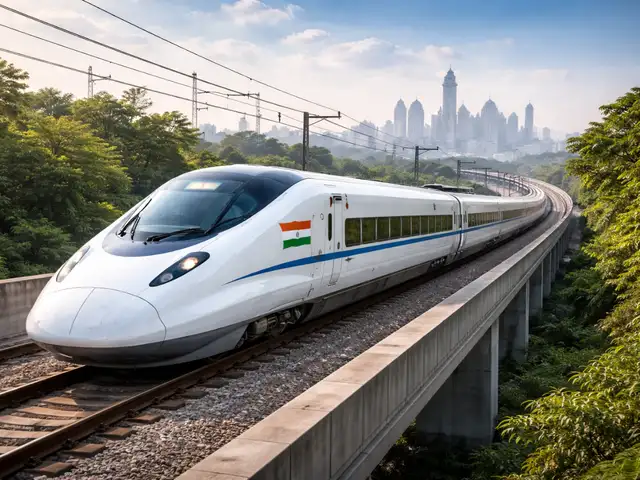
The petition highlights several problems that passengers may encounter while trying to book railway tickets online. These include login and authentication failures, booking-session disruptions, payment-related issues and cases where a passenger's booking attempt does not result in ticket generation.India’s first bullet train project is moving closer to its trial-run stage, with the indigenous high-speed train expected to begin testing on the Mumbai-Ahmedabad corridor in May or June 2027. The project is aimed at cutting travel time between major cities and bringing high-speed rail travel to India for the first time.








The petitioner has clarified that the PIL is not seeking any specific ticket, berth or preferential treatment. Instead, it seeks institutional measures to ensure that genuine passengers have a fair, transparent and reliable opportunity to access available railway accommodation.
ADVERTISEMENT
Petition seeks independent audit of railway reservation system
The petitioner has sought a comprehensive and time-bound technical, operational and administrative audit of the online reservation ecosystem.The proposed audit would examine areas including server and network capacity, booking and queue-management infrastructure, ticket availability displays, authentication systems, payment gateways and ticket-generation processes.
It would also cover transaction reconciliation, RAC and waitlist allocation, refunds, special quotas and access provided to authorised agents.
Advocates Kumud Jha, Paras Jaiswal, Shubham Shekhar and Vishal Kumar Singh, appearing for the petitioner through K&S Domus Legalis, sought an independent examination by technically competent authorities.
ADVERTISEMENT
PIL seeks probe into agents' access and automated booking
Another key issue raised in the petition is whether authorised agents or intermediaries have any technological or operational advantage over ordinary passengers.The plea seeks an examination of whether any such difference exists and, if so, whether it has a legitimate and transparent basis.
ADVERTISEMENT
The petitioner has also sought scrutiny of safeguards against bots, automated scripts, bulk-booking tools, unauthorised software and misuse of account credentials.
However, the petition specifically states that it is not alleging at this stage that any particular broker, intermediary or individual has committed an illegality. Instead, it seeks an independent inquiry to determine whether any unfair or unauthorised advantage exists within the system.
Special railway quotas also under scrutiny
The PIL has also raised questions around special reservation quotas, including High Official Requisition/Emergency and other earmarked quotas.The petitioner has not challenged the existence of legitimate quotas. Instead, the plea seeks an auditable record showing how such quotas are requisitioned, released, allotted and subsequently utilised.
The petition seeks greater transparency so that the use of these earmarked reservations can be examined through system records.
What happens when money is deducted but ticket is not generated?
The plea has also highlighted cases where a passenger's account may be debited even though a ticket is not generated.It seeks a clear and time-bound process for determining the status of such transactions and issuing refunds or reversals wherever legally due.
The petitioner has further sought transparency around the allocation of vacant berths to RAC passengers and the treatment of amounts collected from passengers who remain fully waitlisted after chart preparation.
Petition seeks preservation of railway booking data
The PIL has sought preservation and examination of system-generated records to determine whether the concerns raised are isolated incidents or reflect recurring problems.The records sought include booking logs, server and access logs, authentication records, payment-reconciliation data, transaction and ticket-generation records, availability information, cancellation records and quota-allocation data.
According to the plea, examining these records could help establish how the reservation system functions during periods of high demand and whether any systemic deficiencies exist.
Petitioner seeks corrective action if systemic issues are found
The petition makes clear that it does not ask the court to determine technical aspects of the railway reservation system itself.Instead, it seeks an objective examination by competent authorities and corrective measures if the audit establishes any systemic deficiencies.
The Delhi High Court has now sought the stand of the Railways and IRCTC, with the government and Railways counsel asked to obtain instructions within a week.
Inputs from agencies
Start a SIP with as low as ₹500 with ET Money App!
Download
The Economic Times News App for Quarterly Results, Latest News in ITR, Business, Share Market, Live Sensex News & More.
The Economic Times News App for Quarterly Results, Latest News in ITR, Business, Share Market, Live Sensex News & More.
ADVERTISEMENT


