255 elephants saved from train collisions: How Railways is using 'Plan Bee' to keep elephants off tracks
The Northeast Frontier Railway (NFR) has helped save 255 elephants from potential train collisions between January and September 2026 through AI-based alerts, enhanced patrolling, speed restrictions and coordination with forest officials. Measures...
By ET Online | Updated:
The Northeast Frontier Railway (NFR) has helped prevent train collisions involving 255 elephants between January and September 2026 by stepping up surveillance, deploying technology-based warning systems and coordinating closely with forest officials, railway authorities said on Sunday. According to an IANS report, NFR Chief Public Relations Officer (CPRO) Kapinjal Kishore Sharma said the railway has intensified measures to protect elephants in areas where train tracks pass through wildlife habitats.
255 elephants saved across NFR divisions
Timely interventions by railway personnel helped prevent potential elephant-train collisions across several NFR divisions during the first nine months of 2026, Sharma said.
Of the 255 elephants, 106 were saved in Alipurduar Division in West Bengal, 14 in Rangiya, 122 in Lumding and 15 in Tinsukia Division in Assam.
The railway has identified vulnerable stretches and strengthened monitoring in these areas to detect elephant movement near tracks and alert train crews in time.
AI-based system tracks elephant movement near railway tracks
One of the key measures adopted by NFR is an AI-based Intrusion Detection System (IDS) that uses Distributed Acoustic System (DAS) technology.
ADVERTISEMENT
The system can provide real-time alerts when elephant movement is detected close to railway tracks, allowing railway personnel to take timely action and regulate train movement where required.
Started turning waste plastic into railway sleepers in 2015, Australia now has sleepers that could last up to 50 years & keep tonnes of plastic out of landfills
1/6
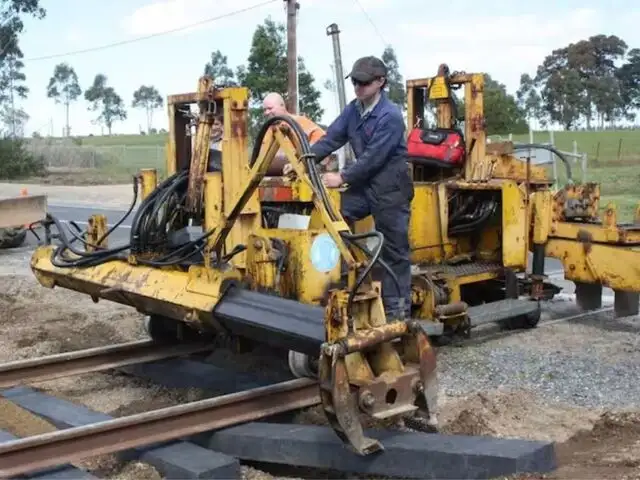
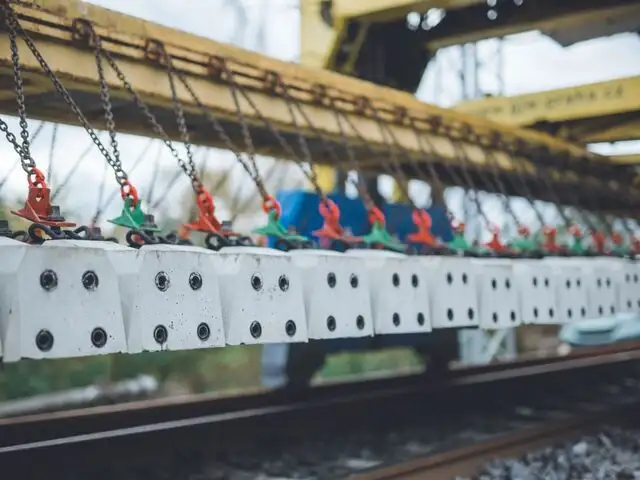
The project was designed to address two problems at once: the growing amount of plastic waste requiring new uses and the need for railway sleepers that can withstand repeated loads. Research into recycled plastic sleepers began in 2015, with government-backed research and development helping the technology move towards railway trials. Researchers had to establish that the material could withstand the forces generated by trains while maintaining track geometry and stability. Laboratory tests examined properties including elastic modulus, maximum elastic strain limit and response to different strain rates. The team also studied load transfer, track stability, noise and vibration, while developing a finite-element model to assess how track gauge and sleeper dimensions affected the material's behaviour.
The project was designed to address two problems at once: the growing amount of plastic waste requiring new uses and the need for railway sleepers that can withstand repeated loads. Research into rec..
Read More
Australia began researching railway sleepers made from recycled plastic in 2015, in an effort to tackle plastic waste while developing an alternative to conventional timber sleepers. The Duratrack project was developed by Victorian manufacturer Integrated Recycling with researchers at Monash University's Institute of Railway Technology. The composite sleepers contain about 85% post-consumer recycled plastic, including agricultural waste such as silage wrap and twine, along with polystyrene and other difficult-to-recycle materials. Instead of sending these materials to landfill, the project converts them into a structural component used beneath railway tracks.
Australia began researching railway sleepers made from recycled plastic in 2015, in an effort to tackle plastic waste while developing an alternative to conventional timber sleepers. The Duratrack pr..
Read More
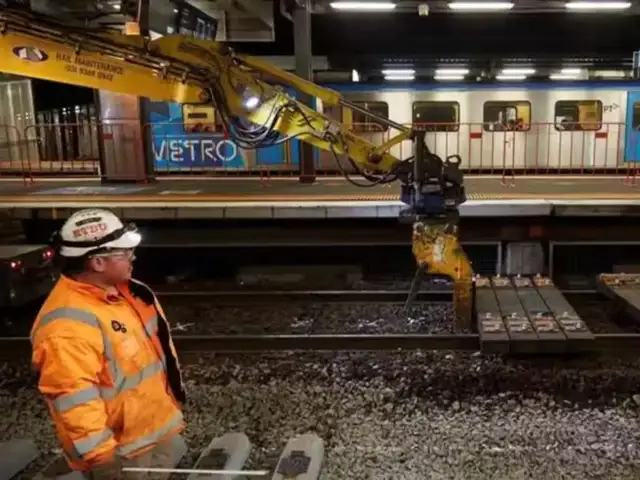
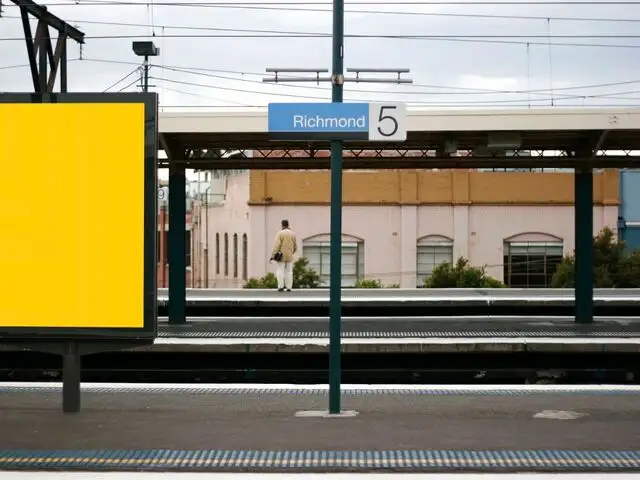
Before being used on Melbourne's metropolitan network, Duratrack sleepers were trialled on selected tourist and heritage railways in Victoria, including Puffing Billy, Walhalla Goldfields Railway and Victorian Goldfields Railway. These trials provided researchers with experience of how the recycled composite performed in railway environments. A major milestone came in June 2019, when around 190 Duratrack sleepers were installed at Richmond railway station in Melbourne as part of an 18-month metropolitan trial. The sleepers were manufactured in Mildura by Integrated Recycling using recycled material sourced in Australia. The project received Victorian government support through Sustainability Victoria, while the research and development was led by Integrated Recycling and Monash University's Institute of Railway Technology.
Before being used on Melbourne's metropolitan network, Duratrack sleepers were trialled on selected tourist and heritage railways in Victoria, including Puffing Billy, Walhalla Goldfields Railway and..
Read More
Further testing was carried out at Tottenham Junction in West Footscray, where 25 Duratrack sleepers were installed in the Australian Rail Track Corporation network alongside timber sleepers in a one-in-five arrangement. Researchers monitored the sleepers for 12 months under real railway conditions, carrying out regular visual inspections and measuring factors including strain, noise and vibration. The testing was aimed at understanding how the plastic composite performed within a working track and improving the design procedures used for recycled-material sleepers. The results helped establish Duratrack as an alternative to timber for specified low-speed railway applications, rather than as a universal replacement for every type of sleeper.
Further testing was carried out at Tottenham Junction in West Footscray, where 25 Duratrack sleepers were installed in the Australian Rail Track Corporation network alongside timber sleepers in a one..
Read More
The research helped create a pathway for Duratrack to be used in real railway projects. The sleepers were type-approved for low-speed siding and yard applications on the Metro Trains Melbourne and V/Line networks. The work also contributed to the development of AS1085.22, an Australian Standard covering alternative material sleepers and providing a framework for sleepers made from materials other than conventional timber, concrete and steel. Duratrack sleepers have since been used at locations including Richmond Station, Wyndham Vale stabling yard and Tottenham Station, with the technology also incorporated into railway upgrade projects, including planned installations on the Shepparton and Warrnambool line upgrades.
The research helped create a pathway for Duratrack to be used in real railway projects. The sleepers were type-approved for low-speed siding and yard applications on the Metro Trains Melbourne and V/..
Read More
The environmental case for the technology is another key part of the project. Sustainability Victoria says around 1,500 Duratrack sleepers, enough for roughly one kilometre of track, can divert about 64 tonnes of recyclable plastic from landfill. The composite sleepers are also designed to be recycled at the end of their service life and turned into new sleepers. The sleepers have a potential lifespan of up to 50 years, although this is a projected service-life estimate rather than evidence from five decades of operation. Victorian government material has also described the lifespan as potentially three times that of traditional timber sleepers. In 2021, Integrated Recycling received funding through the Recycling Modernisation Fund to install a modular production line at its Mildura facility, designed to process an additional 1,600 tonnes of plastic and produce up to 35,000 sleepers a year. The project has therefore moved from laboratory research and small-scale trials towards a larger infrastructure application, turning difficult-to-recycle plastic into a railway component designed to remain in service for decades.
The environmental case for the technology is another key part of the project. Sustainability Victoria says around 1,500 Duratrack sleepers, enough for roughly one kilometre of track, can divert about..
NFR has also introduced other preventive measures, including enhanced patrolling, night-time and temporary speed restrictions following elephant sightings, cautionary signage and vegetation clearance near railway tracks.
Train crews are regularly sensitised about vulnerable stretches and the need to respond quickly when elephant movement is reported.
‘Plan Bee’ system used to keep elephants away from tracks
NFR has also installed its ‘Plan Bee’ system at vulnerable locations. The system uses amplified sounds associated with honeybees to discourage elephants from approaching railway tracks.
ADVERTISEMENT
The railway is also constructing underpasses at identified locations to provide safer routes for wildlife and reduce the need for elephants to cross railway tracks.
NFR asks passengers and railway staff not to throw food waste near tracks
The railway has also focused on reducing factors that could attract elephants towards railway lines.
ADVERTISEMENT
Sharma said NFR is regularly sensitising train crews, railway staff, pantry car personnel and passengers against throwing food waste near railway tracks, as discarded food could attract elephants and other animals.
The railway is maintaining continuous communication with Forest Department officials so that information about elephant movement can be shared in real time and necessary action can be taken quickly.
Train-elephant collisions investigated as safety cases
Sharma said all incidents involving train-elephant collisions are treated seriously and investigated according to prescribed safety procedures.
NFR is continuing to strengthen technology-based monitoring, frontline vigilance and coordination with wildlife authorities to reduce the risk to elephants while ensuring safe train operations across the Northeast.
The Northeast Frontier Railway, headquartered at Maligaon near Guwahati, operates across the Northeastern states, as well as seven districts of West Bengal and five districts of north Bihar.
Business News › Industry › Transportation › Railways › 255 elephants saved from train collisions: How Railways is using 'Plan Bee' to keep elephants off tracksText Size:AAA