
Drinking plastic everyday? Thanks to teabags
1/5
Cuppa plastic
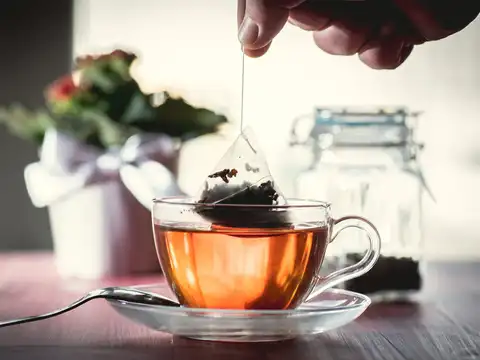
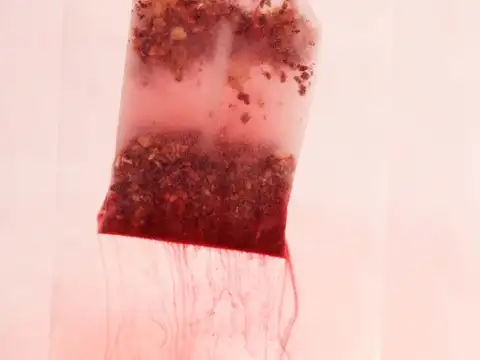
Plastic tea bags may release millions of micro- and nano-sized particles into your brewed beverage, a study claims.
Possible health effects of ingesting these particles are currently unknown, the study published in the journal Environmental Science & Technology noted.
Possible health effects of ingesting these particles are currently unknown, the study published in the journal Environmental Science & Technology noted.
2/5
Brewing plastic
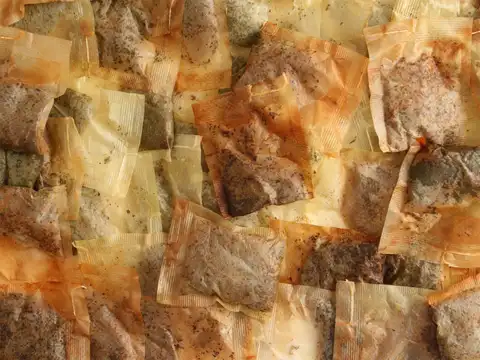
To conduct their analysis, the researchers purchased four different commercial teas packaged in plastic teabags.
The researchers cut open the bags, removed the tea leaves and washed the empty bags.
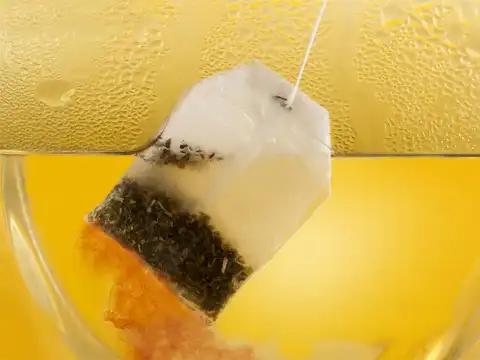
Then, they heated the teabags in containers of water to simulate brewing conditions.
The researchers cut open the bags, removed the tea leaves and washed the empty bags.
Then, they heated the teabags in containers of water to simulate brewing conditions.
3/5
Breaking down
Over time, plastic breaks down into tiny microplastics and even smaller nanoplastics, the latter being less than 100 nanometers (nm) in size.
For comparison, a human hair has a diameter of about 75,000 nm.
For comparison, a human hair has a diameter of about 75,000 nm.
Amazon Top Deals
POWERED BY

Crompton Ozone 75 Litres Desert Air Cooler for home | Large & Easy Clean Ice Chamber | 4-Way Air Deflection | High Density Honeycomb Pads | Everlast Pump | Auto Fill| 3 Year Brand Warranty
₹9,798Buy Now43%
OFF

LG 32 L Convection Microwave Oven (MC3286BRUM, Black, 360° Motorised Rotisserie for Bar-be-queing, 301 Auto Cook Menu, Stainless steel cavity, Indian Cuisine, Tandoor Se, Steam Clean & Diet Fry)
₹19,340Buy Now19%
OFF
4/5
More than what you think
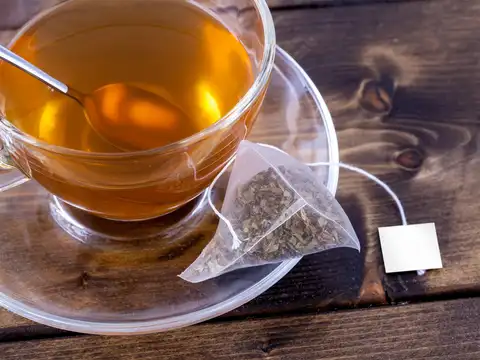
Using electron microscopy, the team found that a single plastic teabag at brewing temperature released about 11.6 billion microplastic and 3.1 billion nanoplastic particles into the water.
These levels were thousands of times higher than those reported previously in other foods, researchers said.
These levels were thousands of times higher than those reported previously in other foods, researchers said.
5/5
Probable abnormalities
In another experiment, the team treated water fleas with various doses of the micro- and nanoplastics from teabags.
Although the animals survived, they did show some anatomical and behavioral abnormalities, researchers said.
Although the animals survived, they did show some anatomical and behavioral abnormalities, researchers said.