BMC tells HC Sonu Sood is a 'habitual offender of illegal construction'
The Bombay High Court on Monday had extended relief to the actor till January 13.
By PTI |
In its notice, the BMC had alleged that Sood was converting the six-storey residential building into a commercial hotel.
MUMBAI: Bollywood actor Sonu Sood is a "habitual offender" who keeps carrying out unauthorised construction work in a residential building in suburban Juhu despite demolition action initiated on two occasions in the past, the Mumbai civic body stated in its affidavit filed in the Bombay High Court on Tuesday.
The affidavit was filed in response to the petition filed by Sood last week challenging a notice issued against him by the Brihanmumbai Municipal Corporation (BMC) in October last year and an order passed by a civil court in December 2020 dismissing his suit against the notice.
In its notice, the BMC had alleged that Sood carried out structural changes in the six-storey residential building 'Shakti Sagar' and was converting it into a commercial hotel.
"The appellant is a habitual offender and wants to enjoy the commercial proceeds of the unauthorised work and therefore once again started reconstructing the demolished portion in order to make it operational as a hotel albeit illegally and without permission from the License department," the civic body said in the affidavit.
As per the affidavit, Sood was trying to protect an "ex-facie illegal commercial hotel which has been constructed and modified by the appellant (Sood) contrary to the sanctioned building plan".
"The appellant has not been given permission for change of user of the said property from residential to commercial and there is no license to run the commercial hotel," the affidavit said.
ADVERTISEMENT
It added that Sood had sought umbrage under unwarranted and baseless allegations of harassment and malafides.
"The appellant, who has totally modified an entire building unauthorisedly into a hotel, is running the same without a license," the municipal corporation said.
The BMC said initial action was initiated against the illegal construction in September 2018 but Sood continued the construction work.
On November 12, 2018, demolition of the unauthorised work was carried out.
ADVERTISEMENT
"Such is the audacity of the appellant that he once again started alterations and reconstructed the demolished portion. Therefore, the BMC once again took action of demolition on February 14, 2020," the affidavit said.
It said Sood had no documents to even indicate that he or his wife Sonali Sood are the owners of the said building.
ADVERTISEMENT
The petition will be heard on Wednesday by Justice Prithviraj Chavan.
The high court on Monday extended till Wednesday the civil court's order restraining the BMC from taking a coercive action against the alleged illegal construction.
Sood in his plea had claimed that he had not carried out any illegal or unauthorised construction in the six-storey Shakti Sagar building.
"The petitioner (Sood) has not made any changes in the building that warrants permission from the BMC. Only those changes that are allowed under the Maharashtra Regional and Town Planning (MRTP) Act have been done," Sood's advocate Amogh Singh had argued.
The petition had requested the court to quash and set aside the notice issued by the BMC in October, 2020, and also sought an interim relief to not take any coercive action against the actor.
Sood, who is known for his roles in films like 'Dabangg', 'Jodha Akbar' and 'Simmba', came into spotlight in 2020 for his philanthropy work in helping migrants reach their homes during the Covid-19 lockdown.
From Cambridge Analytica Scandal To ‘Fake News’, Zuckerberg Remains Controversy’s Child
1/7
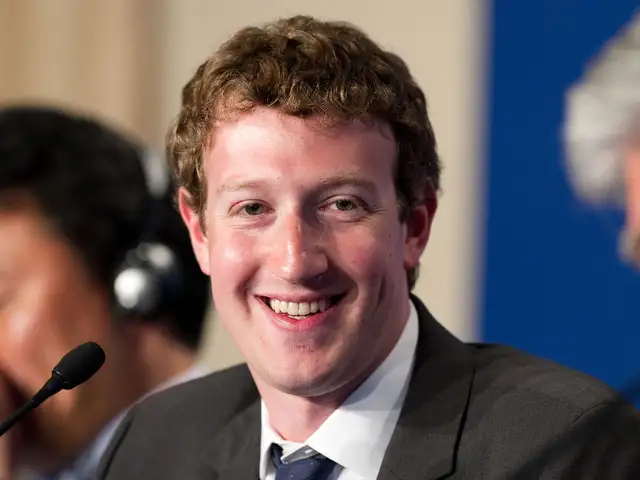
A Harvard-dropout, a serial entrepreneur, a tech genius and the founder of one of the biggest social media platforms in the world, Mark Zuckerberg is undoubtedly one of the most celebrated and renowned figures in the world of tech.
The fifth-richest person in the world, Zuckerberg’s name is often taken in the same breath as well-established multi-billionaires like Bill Gates, Elon Musk and other tech moguls. However, if you were to take a closer look at the life of the Facebook founder, you will see that his journey hasn’t been an easy one.
Zuckerberg has often faced a lot of flak and backlash, mostly for the policies that are enforced on Facebook and the techie has had to go to great lengths to justify them, including testifying before the Congress.
As the entrepreneur turns 36, we take a look at some of Zuckerberg’s biggest controversies and how the tech mogul dealt with them.
A Harvard-dropout, a serial entrepreneur, a tech genius and the founder of one of the biggest social media platforms in the world, Mark Zuckerberg is undoubtedly one of the most celebrated and renown..
Read More
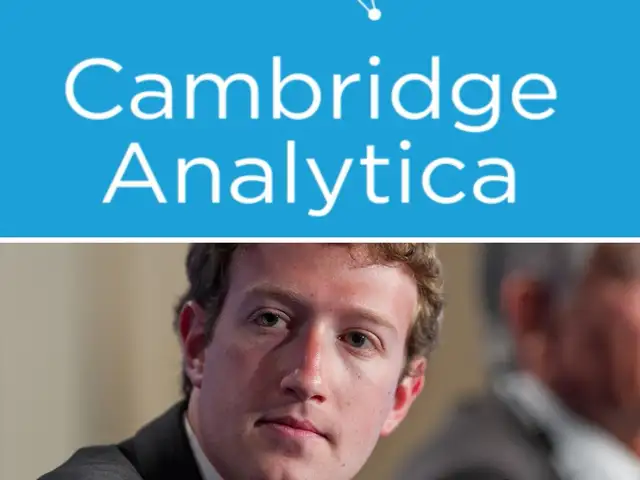
Over the last decade, Facebook and subsequently its founder Zuckerberg has found himself embroiled in many controversies but never has there been a scandal like Cambridge Analytica which shook up not just the entire US but also the world of tech.
Cambridge Analytica, is a British voter profiling company which campaigned for US President Donald Trump during the 2016 US Presidential Elections. The British firm used the data obtained from Facebook to target the likely supporters of President Trump during the online election campaign.
Cambridge Analytica claimed that they had the data for 30 million Facebook users out of 2.2 billion users.
The scandal was so huge, that it sparked an online debate about how social media websites like Facebook and Twitter handle user data. It also inspired a Netflix documentary, ‘The Great Hack’, which covered the scandal in detail.
Over the last decade, Facebook and subsequently its founder Zuckerberg has found himself embroiled in many controversies but never has there been a scandal like Cambridge Analytica which shook up not..
Read More
After the Cambridge Analytica scandal, Zuckerberg found himself in hot water again, but this time, it was not because of the breach of user data or privacy concerns.It was over political ads.
The political ads on Facebook had always been the centre of conversation and there had been much conjecture over their accuracy (or lack thereof). In 2019, in a speech at Georgetown University in mid-October, Facebook CEO Mark Zuckerberg said, ‘We don’t fact-check political ads’.
"We don't do this to help politicians, but because we think people should be able to see for themselves what politicians are saying. And if content is newsworthy, we also won't take it down even if it would otherwise conflict with many of our standards."
For the uninitiated, Facebook employs a third-party fact-checker to ensure the ads on the platform are accurate, but political ads are apparently exempted from the fact-checking. As a result, both Facebook and Mark Zuckerberg got a lot of flak not just from users, but even politicians like Senator Elizabeth Warren and Alexandria Ocaso-Cortez.
After the Cambridge Analytica scandal, Zuckerberg found himself in hot water again, but this time, it was not because of the breach of user data or privacy concerns.It was over political ads.The poli..
Read More
Facebook and subsequently Zuckerberg have often been criticized for not fighting the menace of ‘fake news’ and not taking appropriate measures to curb its spread. According to a Vox report, during the 2016 US Presidential Elections, several stories surfaced on Facebook which were ‘misleading, sloppily reported, or in some cases totally made up’.
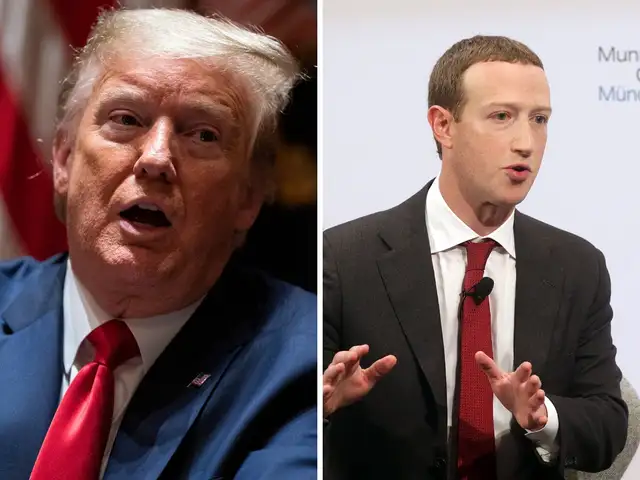
Several pieces of fake news, like Pope endorsing Donald Trump and several other bogus stories did rounds on Facebook. Post the outcome of the 2016 US Presidential Elections, there was a fierce online debate on whether the ‘fake news’ on Facebook could have swung the election in favour of the US President Donald Trump.
In the year 2018, Mark Zuckerberg came up with an apologetic post outlining ways that the platform will tackle the problem.
Facebook and subsequently Zuckerberg have often been criticized for not fighting the menace of ‘fake news’ and not taking appropriate measures to curb its spread. According to a Vox report, during th..
Read More
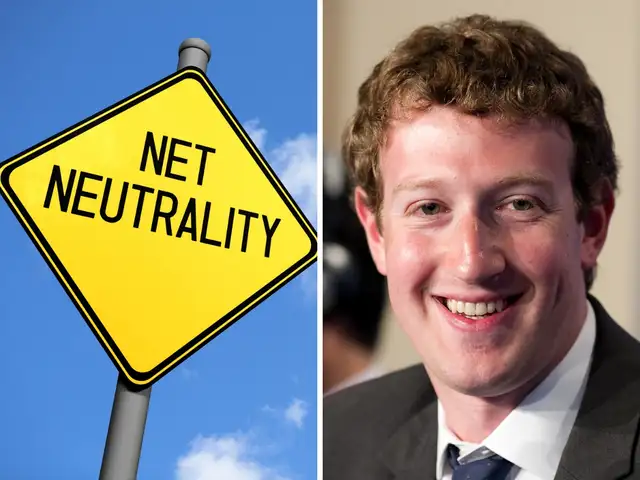
In 2013, Facebook came up with ‘Free Basics’ which provided users with access to certain websites for free, without data charges, in places where Internet access may be less affordable. However, ‘Free Basics’, soon sparked online protests as some users felt that it was a violation of net neutrality.
Soon, several Indian start-ups and telecom regulators pulled out of Facebook’s ‘Free Basics’ to protect net neutrality. Commenting on the events, Mark Zuckerberg defended ‘Free Basics’ in a Facebook post, writing, "If someone can’t afford to pay for connectivity, it is always better to have some access than none at all."
Several Indian users argued that if access to certain websites was given for free, users would prefer using those websites putting others at a disadvantage. Zuckerberg tried to defend ‘Free Basics’ but he couldn’t woo Indians.
In 2013, Facebook came up with ‘Free Basics’ which provided users with access to certain websites for free, without data charges, in places where Internet access may be less affordable. However, ‘Fre..
Read More
On May 10, 2010, which also happened to be Memorial Day, a large-scale online event called ‘Quit Facebook Day’ was organized where a large number of users decided to delete their Facebook accounts.
The number one reason for users to quit Facebook was privacy concerns (48%), being followed by a general dissatisfaction with Facebook (14%), negative aspects regarding Facebook friends (13%), and the feeling of getting addicted to Facebook (6%).
The coordinated mass exodus saw a large number of people delete their Facebook accounts and several signed an online petition at Quitfacebookday.com.
On May 10, 2010, which also happened to be Memorial Day, a large-scale online event called ‘Quit Facebook Day’ was organized where a large number of users decided to delete their Facebook accounts.Th..
Read More
The Facebook algorithm customizes and personalizes every user’s news feed as per their likes and dislikes. This is also one of Facebook’s major attractions as the news feed is tailored as per the user’s needs.
However, the flipside to personalization is the echo chamber, where the user is being presented only with those opinions which align with their worldview, thus limiting their horizons.
The Facebook algorithm customizes and personalizes every user’s news feed as per their likes and dislikes. This is also one of Facebook’s major attractions as the news feed is tailored as per the use..