Quarantine and chill: Netflix gains 16 mn new subscribers
Netflix more than doubled the quarterly growth it predicted in January.
By AP | Updated:
Reuters
It is the biggest three-month gain in Netflix's 13-year history .
BERKELEY: Netflix picked up nearly 16 million global subscribers during the first three months of the year, helping cement its status as one of the world's most essential services in times of isolation or crisis.
The quarter spanned the beginning of stay-at-home orders in the U.S. and around the world, a response to the coronavirus pandemic that apparently led millions to latch onto Netflix for entertainment and comfort when most had nowhere to be but home.
Netflix more than doubled the quarterly growth it predicted in January, well before the COVID-19 outbreak began to shut down many major economies. It was the biggest three-month gain in the 13-year history of Netflix's streaming service.
The numbers, released Tuesday as part of Netflix's first-quarter earnings report, support a growing belief that video streaming is likely to thrive even as the overall U.S. economy sinks into its first recession in more than a decade.
``Our small contribution to these difficult times is to make home confinement a little more bearable,`` Netflix CEO Reed Hastings said while speaking to investors during a video call from a bedroom. Hastings praised Disney's fast start in streaming as "stunning" in his video call with investors. Investor optimism about Netflix's prospects propelled the company's stock to new highs recently, a sharp contrast with the decline in the broader market.
ADVERTISEMENT
Netflix's shares initially surged in after-hours trading after the first-quarter report came out, although they soon fell back. One reason: The strengthening U.S. dollar will likely depress the company's revenue from outside the U.S., which could dampen gains from some of its fastest growing markets.
Currency effects also limited Netflix revenue growth to 17%, for a total of $5.8 billion, even though the company ended March with nearly 183 million worldwide subscribers, a 23% increase from the same time last year. Netflix earned $709 million in the first quarter, nearly tripling its profit from last year.
Netflix shares edged up by less than 1% in Tuesday's extended trading to $435.69, leaving them below last week's record high of $449.52.
Even though it faces plenty of competition, Netflix appears better positioned to take advantage of the surging demand for TV shows and movies largely because of its head start in video streaming.
ADVERTISEMENT
Since beginning its foray into original programming seven years ago, Netflix has built up a deep catalog that can feed viewer appetites even though the pandemic response has shut down production on many new shows.
That stoppage could hurt Netflix as well, although analysts at Canaccord Genuity believe its video library will serve as a ``content moat'' that can keep most competitors at bay.
ADVERTISEMENT
One notable exception is Walt Disney Co., whose recently launched streaming service is also stocked with perennial classics, especially for children who have even more free time than usual.
That's one of the big reasons Disney's service has amassed 50 million subscribers and why Netflix is basking in another resurgence in popularity. Netflix predicted it will add 7.5 million subscribers from April through June. That's nearly three times more than its average springtime gain of 2.7 million subscribers during the past seven years.
Hastings praised Disney's fast start in streaming as ``stunning`` in his video call with investors. ``My hat's off to them,`` he said. ``We are both going to do great work.``
Most of the most popular programs Netflix has in the works for this year are already completed, including the fourth season of ``The Crown,'' its acclaimed series about Queen Elizabeth's continuing reign in the United Kingdom.
Even so, Hastings warned that subscriber growth seems likely to taper off during the second half of the year, given how many new viewers are poring into the service during the first half. That was just a guess, Hastings said, adding that the only thing he feels certain about these days is that video streaming win more converts for at least the next five years.
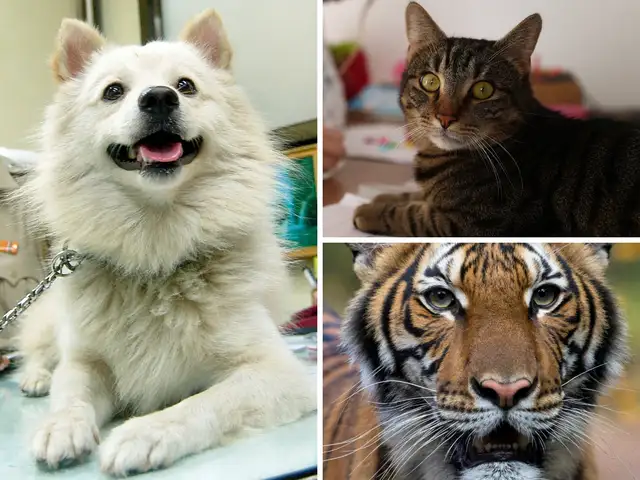
The World Health Organization (WHO) for the longest time believed that coronavirus cannot infect pets like dogs or cats.
In less than a month, several reports of various animals contracting the diseases made the WHO pause and think about their stance. The reports suggest that this deadly virus can break the species barrier and move around.
WHO's intergovernmental animal health body - World Organisation for Animal Health (OIE) - confirmed that there is a possibility that some animals can get infected through close contact with infected humans.
OIE said that studies are under way to understand the issue better and that it is still too early to say whether pets could be the intermediate host in the transmission of the COVID-19.
While they are urging anyone who has become sick to limit contact with pets, we look at all the animals who contracted the disease from humans.
(Representative Image)
The World Health Organization (WHO) for the longest time believed that coronavirus cannot infect pets like dogs or cats.In less than a month, several reports of various animals contracting the diseas..
Read More
Warning! This might upset all dog lovers out there.
The first animal in the world to test positive for coronavirus was a 17-year-old dog which had to be kept under mandatory quarantine in Hong Kong since February 26. The news got grim when the owner revealed that the canine passed away on March 16 - less than a week after he was declared Covid-19-free and released from the government facility.
He was sent home after testing negative, but it was not clear if the virus was the reason for the animal's death. The 60-year-old owner, who also recovered from her Covid journey after being in quarantine, had refused an autopsy of his pet to determine cause of death.
The Pomeranian had been through five tests and all returned 'weak positive' for the new virus.
The last two tests - carried out on March 12 and 13 - 'proved the dog's samples were negative'.
(Representative Image)
Warning! This might upset all dog lovers out there.The first animal in the world to test positive for coronavirus was a 17-year-old dog which had to be kept under mandatory quarantine in Hong Kong si..
Read More
Days after the death of the world's first animal detected with Covid-19, another case emerged in Hong Kong, again, where a German Shepherd living in the Pok Fu Lam area had tested positive for coronavirus during a screening campaign.
While the dog was asymptomatic, his mixed-breed sibling who was living in the same house had tested negative. Both canines were put under quarantine along with their owner who had tested positive as well.
(Representative Image)
Days after the death of the world's first animal detected with Covid-19, another case emerged in Hong Kong, again, where a German Shepherd living in the Pok Fu Lam area had tested positive for corona..
Read More
During a screening campaign carried out on 17 dogs and eight cats living in contact with people carrying the virus, where two canines tested positive, other pets animals like a cat and three dogs were also placed at the animal keeping facility in Hong Kong.
Apart from the Pomeranian which died, the other three animals - an exotic shorthair cat, a Shiba Inu and a mongrel - were also tested negative for the deadly virus, according to reports.
(Representative Image)
During a screening campaign carried out on 17 dogs and eight cats living in contact with people carrying the virus, where two canines tested positive, other pets animals like a cat and three dogs wer..
Read More
Coronavirus didn't spare the felines. In late March, a pet cat was found infected with Covid-19 in Belgium, and it was believed that it contracted the virus from the people it was living with. The corona cat suffered from transitory respiratory and digestive problems after contracting the infection.
To shock you further, the Chinese researchers from Harbin Veterinary Research Institute revealed in a study that cats are not only susceptible to contracting the deadly virus, but could also pass it on to other cats.
However, the study said that other animals such as dogs (despite two known positive cases worldwide), chicken and pigs weren't susceptible like ferrets and cats.
Back home, in an interesting development, authorities have even warmed up to feline lovers. In Kerala, the High Court on April 6 allowed a permit to a cat owner to drive around town in his car amid lockdown to buy food (seven kg biscuits) for his pets.
(Representative Image)
Coronavirus didn't spare the felines. In late March, a pet cat was found infected with Covid-19 in Belgium, and it was believed that it contracted the virus from the people it was living with. The co..
Read More
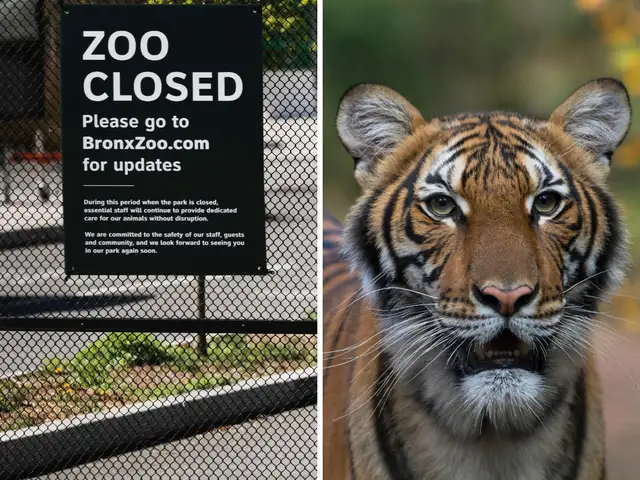
Another resident of the cat family, a 4-year-old female Malayan tiger, Nadia, tested positive for the novel coronavirus on April 6. The tigress, who lives at the Bronx Zoo in New York with six other big cats, is said to have contracted the deadly virus by an asymptomatic zoo keeper.
Nadia's sister, Azul, and two Amur tigers had also developed a dry cough and loss of appetite.
This case came as a shocker as this was believed to be the first known case of an animal infected with COVID-19 in the US, raising questions about human-to-animal transmission of the virus.
Another resident of the cat family, a 4-year-old female Malayan tiger, Nadia, tested positive for the novel coronavirus on April 6. The tigress, who lives at the Bronx Zoo in New York with six other ..
Read More
Along with the 4-year-old Nadia, three African lions had also developed a dry cough and decrease in appetite. While they did not contract the virus, it was reported that they were expected to recover soon.
The deep-chested cats were put under veterinary care, and were seen bright, alert and interactive with the zookeepers at the Bronx Zoo in New York.
(Representative Image)
Along with the 4-year-old Nadia, three African lions had also developed a dry cough and decrease in appetite. While they did not contract the virus, it was reported that they were expected to recover..